1/4

2/4

3/4

4/4
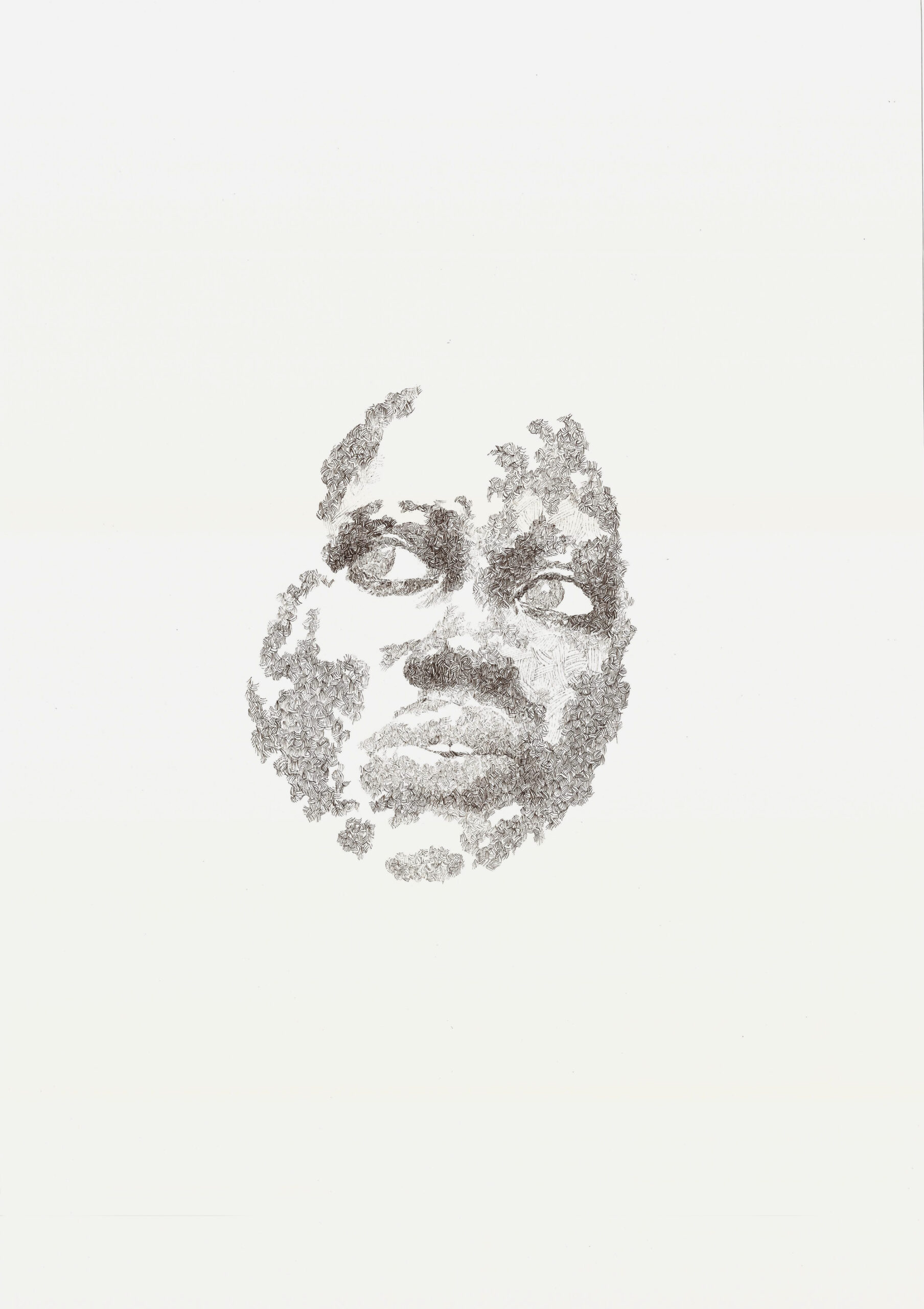
This drawing series, completed in 2019, marked a return to drawing and a rediscovery of the creative practice that first introduced me to art. Long before formal training, I spent hours sketching celebrity photographs from magazines, often working in ink. For this piece, I returned to a familiar subject, portraiture, as a way of reconnecting with the simple joy of making.
After graduating, I experienced a sense of disorientation regarding the subject matter I wanted to pursue and the ideas I wished to contribute to contemporary art discourse. Faced with that uncertainty, I found myself returning to where my creative journey had begun. I believed that this point of origin held an infinite source of possibility and could guide me toward the work I wanted to make.
1/4
2/4
3/4
4/4
My high school art teacher was a significant influence in my decision to pursue Fine Art. She introduced me to the work of South African artists such as Gerard Sekoto and William Kentridge, whose practices left a lasting impression on me. I was particularly drawn to Sekoto’s honest and deeply human depictions of everyday life, and the way he captured the realities of South African communities, landscapes, and township life with sensitivity and warmth. Kentridge’s work inspired me for different reasons; I admired how he remained committed to his distinctive drawing style throughout his career, demonstrating that authenticity and artistic identity can endure over time. Another artist whose work continues to resonate with me is Ibrahim El-Salahi, whose mastery of drawing and mark-making revealed the expressive possibilities of line as both image and language.
The portrait was created using a fineliner, a medium I had always felt comfortable with. Like a pencil, it allowed me to control the movement and direction of each line, but unlike a pencil, it demanded commitment. There was no erasing, no undoing. What was inked remained inked, making each mark a deliberate act of trust in the process.
Looking back, this work represents more than a portrait study. It marks a moment of reconnection, with drawing, with observation, and with the artists and influences that shaped my understanding of visual storytelling. It was a return to the foundations of my practice and a reminder that creativity often moves forward by first looking back.